Blog Archive

Showing posts with label Chevrolet. Show all posts

Chevrolet MPV will be called ‘Enjoy’


‘MPV’ name plate shown at Expo was only a temporary name. Will go on sale mid-2012, petrol powered version will be offered initially.


Chevrolet MPV to be called ‘Enjoy’
Chevrolet unveiled its much-awaited MPV based on the Chinese Wuling CN-100 at the Auto Expo in New Delhi. But while that car carried name plates that simply read ‘MPV’, it was only a working title, and Autocar India has learned that the seven-seater will be called ‘Enjoy’ by the time it goes on sale in mid 2012.

The Enjoy will first be launched with a 94.6bhp 1.4-litre petrol, but will get a 1.3-litre SDE diesel – GM’s version of Fiat’s Multijet – at the beginning of next year. GM is hoping to undercut rivals like the Toyota Innova and Mahindra Xylo by a huge margin – targeting a starting price of under Rs 6 lakh.


FIRST DRIVE New Chevrolet Captiva review, test drive


chevrolet captiva
With the new Captiva, which is a heavily face-lifted version of the original model, GM believes it now has muscle to steer buyers into its showrooms. Look at this refreshed SUV head-on and you will tend to agree. The massive new grille has completely transformed the car and perhaps addressed the Captiva’s biggest weakness – that it just didn’t look SUV enough. The two-part grille, split by a thick strip on which the Chevy bowtie sits, is the now-familiar signature of modern Chevys. The fog lamp housings look much neater too and the headlamps are more striking than before.
Other interesting details are the re-shaped side air vents, a chrome strip for the window line and turn signals integrated into the mirrors. The muscular wheel arches with protective mouldings are bigger than before to accommodate wheels ranging from 17 to 19 inches. For the Indian market however, it’s likely the 17-inch option (to match higher profile tyres) will be offered. The Captiva’s rear is unchanged and, not surprisingly, is the least interesting part of the car with its rather generic lines.
The interiors are largely carried over too but GM has made some clever design changes to give the cabin a significant lift. The centre console is sharper, better sculpted and has angular vents that give it a sportier look. The large, seven-inch screen is functional, especially with the increased proliferation of navigation systems. GM India is likely to offer the new Captiva with a GPS navigation option on the higher-spec version.
The instrument cluster is completely new as well and unlike the previous model, the speedo and tacho sit separately and are much easier to read. The new Captiva gets an electrically operated parking brake which is controlled by a small switch on the base of the centre console. The space vacated by the handbrake lever has been taken up by dual cup holders that slide underneath the central armrest.
Plastic quality is much improved and feels plusher than before but for a Rs 20-lakh vehicle, it’s still not good enough. There are still lots of shiny, hard bits which take a lot away from the cabin ambience. The switchgear though is pretty decent and gear lever and steering feel better to hold too. The quality level is better than the XUV500’s but the Captiva still can’t match European or Japanese standards.
The old Captiva’s seven-seat configuration remains unchanged and that’s a good thing. We have always liked the ease with which the spring-loaded middle seat tumbles forward with the mere pull of a lever. The third row collapses into the floor to make way for a flat, voluminous luggage area, but with all three rows in place, you can’t travel with much more than your toothbrush.
To match its aggressive looks, GM has given the new Captiva a lot more grunt by plonking a new 2.2-litre diesel under the hood. This twin-cam, 16-valve motor gets a high-pressure, 1800-bar fuel-injection system (for more precise control of combustion) and the compression ratio has been lowered to reduce exhaust emissions.
This 2.2 diesel engine comes in two states of tune; the lower output of 163bhp drives only the front wheels while the more powerful 184bhp version powers both two-wheel and four-wheel-drive versions. In addition to the six-speed manual ’box, there’s a six-speed auto option as well. For international markets which prefer petrol, the Captiva gets a new 3.0 V6 developing a lusty 258bhp, but given the trajectory of petrol prices these days, this big petrol motor, which can bankrupt you, certainly won’t make it to Indian showrooms.
It’s not clear which engine options GM will offer in the Indian Captiva, but the 184bhp version is a certainty. The sizeable 36bhp jump in power takes the Captiva crucially past the Fortuner (168bhp) and closer to the Santa Fe (194bhp). The surprising bit about this engine however is its refinement and the impressively low noise levels. This motor is much quieter at idle than the older 2-litre unit and even when you rev it hard, it’s not very obtrusive. A dual-mass flywheel, a stiffer engine block and balance shafts integrated into the oil pump have all played a role in lowering vibrations and noise.
Sadly, the transmission doesn’t feel as refined as we would have liked. The clutch is too heavy and the dual-mass flywheel doesn’t make its engagement particularly smooth. Making things  worse is the ponderous gearshift, which demands strong triceps and makes city driving hard work.  In fact, this is one of the worst gearshifts I’ve experienced on an SUV. Thankfully, the well chosen ratios of the six-speed ’box and the increased torque levels allow you to get away with minimal use of the gearlever.
Floor the nicely spring-loaded accelerator pedal and you can instantly feel the huge improvement in power. There’s still a bit of turbo lag but once you get past 1800rpm there’s a strong surge that makes overtaking a breeze. The new Captiva is a happy cruiser as well and the tall sixth gear and low noise levels allow you to amble down any highway in a very relaxed manner. The Captiva feels best on long drives and when you make good use of the flexible interiors, it’s the ideal holiday car.
The new Captiva’s chassis has been tweaked to tidy the dynamics, and within a few metres of driving you can tell that the ride and handling is much better now. The suspension feels a lot more settled especially on an uneven surface and bumps are absorbed with ease. The electronically controlled steering is more responsive but it still doesn’t have sufficient feel or weigh up quite as we would like. The Captiva still wallows through corners so it’s best not to push this Chevy hard.
There’s a lot more kit in the new Captiva. You get six airbags, an upgraded music system, hill start assist and an on-demand 4x4 system which sends drive to the rear wheels via an electronic clutch when necessary. We didn’t get a chance to try out the 4x4 system but our sense is that the Captiva, like most soft-roaders, is best for mild off-road excursions.
Despite all the improvements, the new Captiva doesn’t stand head and shoulders above the Santa Fe or even the pricier Nissan X-Trail for that matter. Though it ticks all the right boxes, the new Captiva doesn’t stand out in any key area and hence, to make it attractive, GM India will need to price it very aggressively.
Watch video review here

Fact File

Price Range (in lakhs)*
Ex-showroom price21.4 lakh (ex-Mumbai, est)
Engine
FuelDiesel
InstallationFront, transverse
Type4cyl, in line, 2231cc turbo diesel
Bore/stroke86/96mm
Power184bhp at 3800rpm
Torque40.78kgm at 2000rpm
Transmission
Gearbox6-speed manual
Dimensions
Length4673mm
Width1849mm
Height1727mm
Wheel base2707mm
Chassis & Body
Weight1978kg
Performance
0-1009.6 sec
Economy
Tank size65 litres

FIRST DRIVE Chevrolet Volt review, test drive


Chevrolet built the Volt to deal with one problem and one problem alone - range anxiety. Engineered to override the nagging fear you have in an electric car, when the charge in your battery is running low, the Volt is an electric car whose range can be infinitely extended by using a petrol engine as an electric generator.
Powered by GM’s unique Voltec propulsion system which consists of a lithium-ion battery pack and electric drive unit coupled together, the Volt can be driven as a pure electric for a range of around 40 to 80 kilometres. And for most folks that will be the preferred mode of travel. Once the charge is partially depleted however, and here’s the unique part, a 1.4-litre petrol engine kicks in, charges the battery and extends the range by a massive 550 kilometres. And if you want to travel even further, just top up the tank.
This, of course, means that you can use the Volt both as a city car and as a long distance vehicle, giving it flexibility no other production electric car currently enjoys. And you can use it as you will. You can charge the car off a wall socket at night and use it as an electric car all week, not consuming even a drop of fuel. The Volt, however, also gives you the flexibility to make unscheduled long excursions and even cross country trips. So basically, the penalties for driving an electric are almost nil.
The Volt’s battery can be charged using a household electrical outlet, or much faster via purpose-built 240V charging posts which are being set up at convenient locations across the USA (we use 240 volts in India in any case). Once the vehicle is plugged in, owners can schedule either immediate or delayed charges (to take advantage of off-peak electricity rates) and the Volt can even be monitored remotely via computer on MyVolt.com or an exclusive smartphone app.
While you could argue that the Volt is similar to a hybrid in some ways, one key differentiator is that GM claims there is no direct connection between the petrol engine and the wheels of the car. And this makes a huge difference to the car’s architecture. The Volt’s largest component is the battery, which is more than five feet long. The 16kWh lithium-ion battery pack weighs almost 200kg, is T-shaped and actually sits in a spine between the seats, allowing the Volt to have a real boot. The petrol motor is mounted in the nose and drive from the electric motors is sent to the front wheels. Why two motors? Chevy engineers say the second motor is used to provide the Volt additional thrust when you need more power, and it’s also used
as a force multiplier, much like one would use a gearbox to drop rpm at higher road speeds.
Up close and in the flesh the Volt looks impressively cutting-edge. The faux grille instantly tells you that all is not normal here, it’s clear a lot of attention has been paid to refining aerodynamics and, truth be told, this really is a well balanced, good looking car with no odd quirks included just to make the design stand out as something different.
Getting behind the wheel of the Volt sparks more curiosity than excitement. There are all sorts of three-dimensional graphics on the touch screens, plenty of new controls and options to learn and several driving modes to understand. There are Normal and Sport modes, but since this is an electric, I stick it in Normal and set off seamlessly. The Volt pulls away easily, as any torque rich electric should, and the step-off is very impressive. It feels easy and fluid to drive, and getting up to speed is almost effortless. The smooth torque makes this 1.7-tonne car feel like it weighs substantially less and the Chevy just seems to sail along effortlessly. There’s very little of the rubber-band effect you normally associate with an electric and the silence of the drivetrain actually makes the journey really enjoyable. The relaxed demeanor continues even when you pull the car harder; must have something to do with all those hundreds of millions of relaxed but potent V8s Chevy’s built in the past. In comparison, something like a Prius feels [link for tech pics] strained and wheezy.
Only under hard acceleration above, say, 80kph does the engine cut in and become quite audible. It’s not got the nicest of engine notes and sounds strained and a bit long in the tooth [old?], which doesn’t really fit the character of this car of the future. And the engine doesn’t just chug along at one speed. Pull the Volt hard and the revs rise, the second motor also cutting in at higher speeds and adding to the whine. The performance, however, is quite strong and the Volt easily breezes along at speeds in excess of 120kph.
What makes the experience even more rewarding is fact the Volt actually drives quite nicely. The car is based on GM’s new Delta platform, which also underpins the Chevy Cruze, and it uses the same basic MacPherson suspension. The Volt also gets lightweight wheels and specific Goodyear low-friction tyres for a lower rolling resistance. The chassis feels reasonably stiffened, the steering feels very connected once you get away from the straight ahead position, and with weight of the batteries sitting low in the car, body control is quite good too. So it’s fun to drive, even around on a challenging road, which comes as a bit of a surprise. “It was essential to make the Volt funa to drive so that we could connect with people who really like cars”, said one of the engineers Lawrence Ziehr.
The regenerative brakes, that return some of the power to the batteries, however, feel typically wooden, and that spoils the driving experience a bit. Also not too impressive is ride quality. Though comfortable, the suspension is quite audible and you hear a few thumps without getting tossed around too much. The car’s central spine of lithium-ion batteries means the Volt can only be had with two seats in the rear, but they are comfortable enough for average passengers. What you do get is large boot that makes the Volt quite a practical car to own.
Chevrolet wants the message of the Volt to be spread far and wide. A right hand drive version has been made for countries like the UK and Japan, the car will soon be in China and Chevrolet India is working on a plan to get the car here as well. In half a decade or so, we could also see a diesel version of the Volt or something smaller, targeted at European and Indian markets. And wouldn’t that be great? Just imagine how low your running costs could be. Something to definitely look forward to.

Fact File

Price Range (in lakhs)*
Ex-showroom priceRs 34 lakh (Estimated)
Engine
InstallationFront transverse, FWD
TypeTwo electric motors plus 1398cc DOHC, petrol Generator
Power111kW (149bhp) at 4800rpm
Torque27.83kgm
Transmission
GearboxTwo-ratio planetary
Dimensions
Length4498mm
Width1788mm
Height1430mm
Wheel base2685mm
Chassis & Body
Weight1715kg
Performance
0-1009.0sec
Economy
Tank size35.2 litres

2013 Chevrolet Malibu : Latest Cars Reviews


2013 Chevrolet Malibu : Latest Cars Reviews

It says something about the breakneck pace of America's mid-size sedan segment that the departing Chevrolet Malibu was beginning to feel long in the tooth. Introduced for the 2008 model year to great fanfare and critical praise, General Motors' family four-door has seen its appeal dinged by new entries from companies like Kia, Hyundai and Volkswagen, along with massively updated models from companies like Ford (not to mention perennial favorites from Honda and Toyota).

2013 Chevrolet Malibu ECODespite its evolutionary styling, this is more than a simple refresh of the current Epsilon-based car, the Malibu that debuted today at the 2011 New York Auto Show actually gains some revised proportions for its eighth generation thanks to its migration to GM's Epsilon II platform. Shorter overall, the new Malibu nevertheless boasts increased trunk space and a number of enhanced interior metrics thanks to increased width, though sitting inside, we found rear-seat headroom to be tighter than we remembered. Part of the reasoning why Chevy has chosen to go with a shorter overall length is to increase the car's global appeal – the Malibu will be sold in over 100 world markets (and in many of them, bigger is not always better).

Powered at launch by a 2.5-liter Ecotec four-cylinder paired with a six-speed automatic, the powertrain will produce 190 horsepower and 180 pound-feet of torque. A forced-induction four-cylinder is expected at a later date, but the Malibu is likely to follow Hyundai-Kia's lead in eschewing six-cylinder power altogether.

Thus far, Chevy isn't releasing fuel economy figures, but it claims the 2013 Malibu is the most aerodynamic car in its segment (helped, no doubt, by drag-reducing active shutters up front), along with being the quietest. Officials have told us that they believe the car will return fuel economy above 30 miles per gallon.

Chevrolet surprised attendees at its press conference today by also rolling out the Malibu ECO, an eAssist-equipped high efficiency model that's expected to earn fuel economy ratings of 26 mpg city and a lofty 38 mpg highway. Powered by a 2.4-liter Ecotec four-cylinder and aided by the aforementioned eAssist mild hybrid system and special aerodynamic tweaks, GM says the Malibu ECO can go up to 550 miles between fill ups, delivering fuel economy figures that would make some hybrid family sedans envious.

2013 Chevrolet Malibu : Latest Cars Reviews


2013 Chevrolet Malibu : Latest Cars Reviews

It says something about the breakneck pace of America's mid-size sedan segment that the departing Chevrolet Malibu was beginning to feel long in the tooth. Introduced for the 2008 model year to great fanfare and critical praise, General Motors' family four-door has seen its appeal dinged by new entries from companies like Kia, Hyundai and Volkswagen, along with massively updated models from companies like Ford (not to mention perennial favorites from Honda and Toyota).

2013 Chevrolet Malibu ECODespite its evolutionary styling, this is more than a simple refresh of the current Epsilon-based car, the Malibu that debuted today at the 2011 New York Auto Show actually gains some revised proportions for its eighth generation thanks to its migration to GM's Epsilon II platform. Shorter overall, the new Malibu nevertheless boasts increased trunk space and a number of enhanced interior metrics thanks to increased width, though sitting inside, we found rear-seat headroom to be tighter than we remembered. Part of the reasoning why Chevy has chosen to go with a shorter overall length is to increase the car's global appeal – the Malibu will be sold in over 100 world markets (and in many of them, bigger is not always better).

Powered at launch by a 2.5-liter Ecotec four-cylinder paired with a six-speed automatic, the powertrain will produce 190 horsepower and 180 pound-feet of torque. A forced-induction four-cylinder is expected at a later date, but the Malibu is likely to follow Hyundai-Kia's lead in eschewing six-cylinder power altogether.

Thus far, Chevy isn't releasing fuel economy figures, but it claims the 2013 Malibu is the most aerodynamic car in its segment (helped, no doubt, by drag-reducing active shutters up front), along with being the quietest. Officials have told us that they believe the car will return fuel economy above 30 miles per gallon.

Chevrolet surprised attendees at its press conference today by also rolling out the Malibu ECO, an eAssist-equipped high efficiency model that's expected to earn fuel economy ratings of 26 mpg city and a lofty 38 mpg highway. Powered by a 2.4-liter Ecotec four-cylinder and aided by the aforementioned eAssist mild hybrid system and special aerodynamic tweaks, GM says the Malibu ECO can go up to 550 miles between fill ups, delivering fuel economy figures that would make some hybrid family sedans envious.

2012 Chevrolet Camaro ZL1


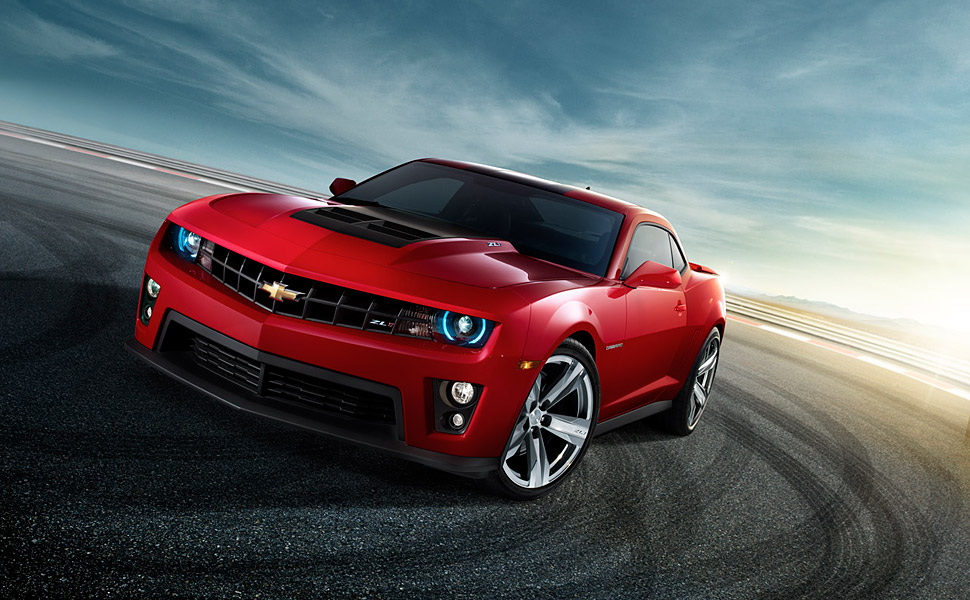
Chevrolet has introduced the most powerful Chevrolet Camaro ever built, the 2012 Chevrolet Camaro ZL1 at at the 2011 Chicago Auto Show. The 2012 Chevrolet Camaro ZL1 name is was named for a limited-edition, after the original Chevrolet Camaro ZL1 of 1969, that featured an all-aluminum racing engine installed in just 69 Camaros in the late 1960s

“Camaro ZL1 is about high-tech performance and design, and is a type of car no one has ever brought to this segment previously,” said Rick Scheidt, vice president of Chevrolet marketing. “It’s the most technically advanced Camaro ever, so we’ve chosen a name from the most elite and exclusive Camaro in history.” The 2012 Chevrolet Camaro ZL1 is planned to launch at the beginning of 2012 in limited number, which The 2012 Chevrolet Camaro ZL1 go head-to-head with the 2012 Ford Shelby GT500 Mustang.

The 2012 Chevrolet Camaro ZL1 exterior distinguished by a redesigned front fascia, a front splitter, HID headlamp, new vertical fog lamps and a carbon-fiber air extractor which help create additional downforce at speed. the 2012 Chevrolet Camaro ZL1 exterior also gets new rocker panels, new design 20-inch forged aluminum wheels with a new Goodyear Supercar F2 tires, a twin-paired exhaust tips, a subtle rear spoiler and a reworked diffuser, which also increase downforce, lower drag and enhance the car’s aerodynamics.

“Everything about the ZL1′s design is directly related to its technology and serious performance, especially aerodynamics,” said Ed Welburn, vice president, Global Design. “Our designers’ goal was to execute that function-oriented design with beautifully sculpted forms, creating an imposing, powerful persona. Function becomes the aesthetic. The intent is a car that delivers on the attitude it projects.” For completing the exterior look, the 2012 Chevrolet Camaro ZL1 also gets “ZL1” badging on the grille, hood, decklid and brake calipers as well as all of the standard Camaro colors will be offered on the ZL1.

Performance

The 2012 Chevrolet Camaro ZL1 engine is powered by a LSA 6.2L supercharged V-8 engine that also used in the Cadillac CTS-V, which produces an estimated higher than the 550 HP and 550 lb.-ft. of torque. Chevrolet said “official estimates of the car’s capabilities will be released later in 2011″. The 2012 Chevrolet Camaro ZL1 engine is paired with the high-performance Tremec TR-6060 six-speed manual transmission.

The 2012 Chevrolet Camaro ZL1 is also have a dual-mode exhaust system, a Magnetic Ride Control that features two driver-selectable Tour and Sport damping modes, a new electric power steering system, Brembo anti-lock brakes will be used on all four wheels with six piston calipers and super-light 20-inch forged-aluminum wheels with ultra-grippy Goodyear Supercar F2 tires.

Interior

Inside, the 2012 Chevrolet Camaro ZL1 interior features a unique instrument panel, a redesigned steering wheel and alloy pedals, the “four-pack” auxiliary gauge system, Head-Up Display with unique performance readouts, a six-way power driver and passenger seats, door panel inserts, and ZL1-logo sill plates and black leather sports seats with microfiber suede inserts, there’s only one interior color – black.

The 2012 Chevrolet Camaro ZL1 interior also features an ew technology including Wireless PDIM and USB-port, a Boston Acoustics premium audio system, the steering wheel audio controls with Bluetooth capability, a rear camera system and rear parking assist.
Price

The 2012 Chevrolet Camaro ZL1 price is estimated at $49,495, which The 2012 Chevrolet Camaro ZL1 will go on sale at the beginning of 2012 with official prices and final details will be announced at a later date.

[Source: autoclubmax.com]


2012 Chevrolet Camaro ZL1


Chevrolet has introduced the most powerful Chevrolet Camaro ever built, the 2012 Chevrolet Camaro ZL1 at at the 2011 Chicago Auto Show. The 2012 Chevrolet Camaro ZL1 name is was named for a limited-edition, after the original Chevrolet Camaro ZL1 of 1969, that featured an all-aluminum racing engine installed in just 69 Camaros in the late 1960s

“Camaro ZL1 is about high-tech performance and design, and is a type of car no one has ever brought to this segment previously,” said Rick Scheidt, vice president of Chevrolet marketing. “It’s the most technically advanced Camaro ever, so we’ve chosen a name from the most elite and exclusive Camaro in history.” The 2012 Chevrolet Camaro ZL1 is planned to launch at the beginning of 2012 in limited number, which The 2012 Chevrolet Camaro ZL1 go head-to-head with the 2012 Ford Shelby GT500 Mustang.

The 2012 Chevrolet Camaro ZL1 exterior distinguished by a redesigned front fascia, a front splitter, HID headlamp, new vertical fog lamps and a carbon-fiber air extractor which help create additional downforce at speed. the 2012 Chevrolet Camaro ZL1 exterior also gets new rocker panels, new design 20-inch forged aluminum wheels with a new Goodyear Supercar F2 tires, a twin-paired exhaust tips, a subtle rear spoiler and a reworked diffuser, which also increase downforce, lower drag and enhance the car’s aerodynamics.

“Everything about the ZL1′s design is directly related to its technology and serious performance, especially aerodynamics,” said Ed Welburn, vice president, Global Design. “Our designers’ goal was to execute that function-oriented design with beautifully sculpted forms, creating an imposing, powerful persona. Function becomes the aesthetic. The intent is a car that delivers on the attitude it projects.” For completing the exterior look, the 2012 Chevrolet Camaro ZL1 also gets “ZL1” badging on the grille, hood, decklid and brake calipers as well as all of the standard Camaro colors will be offered on the ZL1.

Performance

The 2012 Chevrolet Camaro ZL1 engine is powered by a LSA 6.2L supercharged V-8 engine that also used in the Cadillac CTS-V, which produces an estimated higher than the 550 HP and 550 lb.-ft. of torque. Chevrolet said “official estimates of the car’s capabilities will be released later in 2011″. The 2012 Chevrolet Camaro ZL1 engine is paired with the high-performance Tremec TR-6060 six-speed manual transmission.

The 2012 Chevrolet Camaro ZL1 is also have a dual-mode exhaust system, a Magnetic Ride Control that features two driver-selectable Tour and Sport damping modes, a new electric power steering system, Brembo anti-lock brakes will be used on all four wheels with six piston calipers and super-light 20-inch forged-aluminum wheels with ultra-grippy Goodyear Supercar F2 tires.

Interior

Inside, the 2012 Chevrolet Camaro ZL1 interior features a unique instrument panel, a redesigned steering wheel and alloy pedals, the “four-pack” auxiliary gauge system, Head-Up Display with unique performance readouts, a six-way power driver and passenger seats, door panel inserts, and ZL1-logo sill plates and black leather sports seats with microfiber suede inserts, there’s only one interior color – black.

The 2012 Chevrolet Camaro ZL1 interior also features an ew technology including Wireless PDIM and USB-port, a Boston Acoustics premium audio system, the steering wheel audio controls with Bluetooth capability, a rear camera system and rear parking assist.
Price

The 2012 Chevrolet Camaro ZL1 price is estimated at $49,495, which The 2012 Chevrolet Camaro ZL1 will go on sale at the beginning of 2012 with official prices and final details will be announced at a later date.

[Source: autoclubmax.com]


Chevrolet Mi-Ray --- 2011 Concept

Chevrolet Mi-Ray front lookUnspecialized Motors' organization eye in Seoul, Southwest Korea, has undraped its prime conception car, and it is a "future" we definitely can acceptance. This carbon-bodied, aluminum-framed plug-in word is one smooth ride we'd equal to see the Unspecific develop.The Mi-Ray, Peninsula for "succeeding," showcases a lot of the sophisticated tech General Motors already

Chevrolet Colorado Concept

The Chevrolet Colorado Concept was revealed in advance of the 2011 Bangkok International Auto Show, where it is making its global public debut. The concept previews the next-generation Chevrolet Colorado midsize pickup truck, which will build on Chevrolet's strong truck DNA and award-winning heritage. The Chevrolet Colorado goes on sale in Thailand later this year."Thailand is the world's-largest

2011 Chevrolet Impala Luxury sedan Concept

New 2011 Chevrolet Impala LTZ in Black. Shown with available dealer-installed polished stainless steel exhaust tips from Chevrolet Accessories. The Full-Size Car More People Depend On. It’s easy to understand why the Chevrolet Impala is America’s No. 1 choice in full-size sedans. For more than 50 years, Impala has delivered proven excellence in a car people keep coming back to. With its standard

2011 Chevrolet Malibu New Concept and Performance

New 2011 Chevrolet Malibu with more than 40 awards to its credit, the Chevrolet Malibu continues to command attention and acclaim with praise such as, "Chevrolet Malibu hits a high-water mark for its size and price with taut proportions, elegant lines and a crisp, clear profile. he same concept used in expensive luxury cars - helps create a barrier to reduce unwanted noise. Bright Lights Malibu

2013 Chevrolet Silverado 1500

2013 Chevrolet Silverado 1500 is the inclusion of Cheyenne pickup technology for the 2003 model. This is seriously a styling approach that was descendant of the 1955 Cameo, 1988 C/K Silverado, and the 1972 C10 Cheyenne. With this GM has set to craft the model which serves the purpose of the customer offering splendid performance.The Chevrolet Silverado 1500 has set to give the finishing touch by

2012 Chevrolet Sonic

2012 Sonic. Just don't call it the Aveo. The five-door hatch and four-door sedan are set to be officially unveiled later today at the 2011 Detroit Auto Show, but the Bow Tie brand has been kind enough to share the skinny on this vehicle that's supposed to tango with the likes of the new Hyundai Elantra and the Ford Fiesta. The Sonic will be available with a standard 1.8-liter four-cylinder engine

2012 Chevrolet Impala

When Chevrolet returned the Impala to its lineup after a brief hiatus in 1999 as a 2000 model, many thought that Chevrolet would continue to emphasis the brand’s flagship sedan. Sadly, the GM bankruptcy seems to have cut those dreams short and the 2012 that is expected to hit showrooms in late 2011 will be largely unchanged if industry rumors prove to be accurate. Considering the fact that no

2012 Chevrolet Aveo Sedan

Prior to the launch of the highly successful Cruze, the Aveo was Chevrolet's best-selling car globally. An all-new Aveo goes on sale summer 2011 and it is designed to expand on the nameplate's success in the highly competitive small car market. It will be offered as a five-door hatch and as a sedan, each delivering excellent ride and handling characteristics and a sporty and sophisticated design,

2013 Chevrolet Malibu

The all-new 2013 Chevrolet Malibu made its global debut at the 2011 Auto Shanghai, with simultaneous introductions in the United States and China - two of the nearly 100 countries on six continents where it will be sold. Chevrolet's first global midsize sedan will provide customers from Shanghai to New York and Sydney to Sao Paulo with expressive design, advanced technologies, ride performance

2011 Chevrolet Corvette Luxury Concept Sport Car

The 2011 Chevrolet Corvette is legend is available in a whole family of great sports cars Coupe and Convertible, Grand Sport, Z06 and the awesome, range-topping ZR1. Horsepower ranges from 430 to an amazing 638. The available technologies include carbon ceramic brakes, carbon fibre body panels, electronic launch control and much more. Every Corvette comes with an unmatched competition heritage.

2011 Chevrolet Cruze Luxury Concept Compact Car

2011 Chevrolet Cruze Review The 2011 Chevrolet Cruze is Chevrolet’s first true global car, and will have launched in more than 60 countries prior to its United States start of production. Engineers have logged more than 4,000,000 customerlevel durability miles on Cruze, driving in every major continent around the world in every conceivable condition the altitude in the Alps, the heat of Africa

2011 Chevrolet Equinox Best Concept and Performance

 First generation 2008 Chevrolet added a Sport model of the Equinox that features lowered ride height and the new 3.6 DOHC V6. The larger, more powerful (264 hp (197 kW) or 40% increase) engine allowing acceleration from 0 to 60 mph (97 km/h) in under seven seconds. The Sport model received a slightly different exterior styling, 18 inch wheels and a six-speed automatic transmission. It was

2011 Chevrolet Camaro High Technology Power

2011 Chevrolet Camaro Coupe, Camaro SS ans Camaro Convertible ReviewsHow you feel behind the wheel is everything in a 2011 Chevrolet Camaro, and driving a convertible is no different. That’s why Chevy retooled the body and chassis, adding four types of braces from a strut tower-to-tower to a pair of underbody V braces. Rigidity goes up. Exhilaration goes way up, too, as the performance of the

Popular Posts